Tesla Optimus Delivery Target Slips to 2027
Elon Musk admits mechanical and software hurdles continue to delay the widespread rollout of Tesla’s humanoid robots.
By Lucia Herrera ·
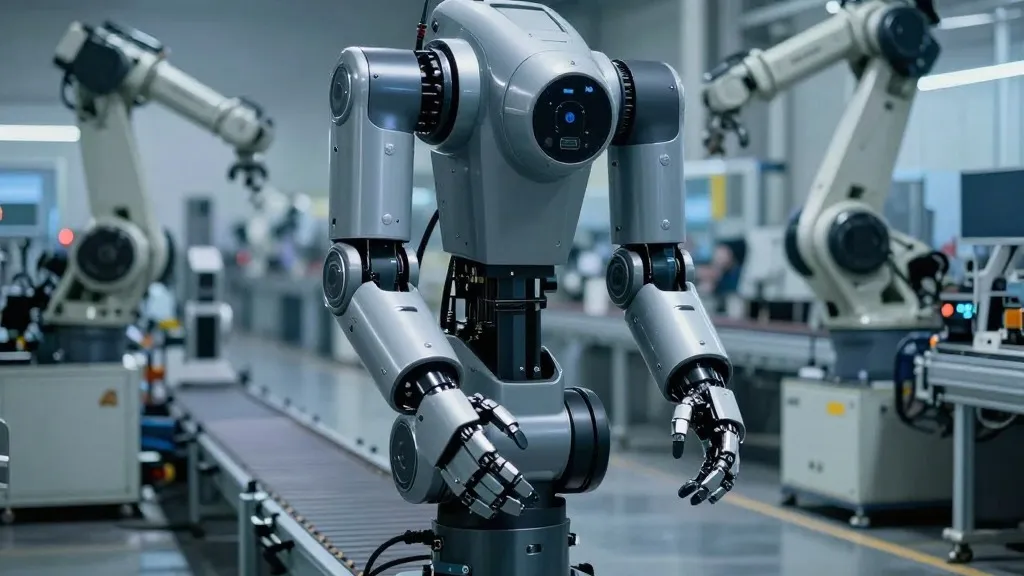
Tesla has officially pushed back the start of external Optimus deliveries to the end of 2027, a timeline that reflects ongoing struggles with the robot’s hardware and intelligence. During the Q3 2026 earnings call, CEO Elon Musk acknowledged that the company is still working through significant technical challenges before the machines can be sold to outside businesses. This update arrives after previous internal targets were missed, further stretching the gap between announcement and mass market availability.
According to Musk, the primary obstacles remain the robot’s hands, overall durability, and its artificial intelligence capabilities. He stated that Tesla has begun early production on the high-volume line in Fremont, a facility previously dedicated to Model S and X manufacturing. While the infrastructure is largely in place for a theoretical capacity of one million units annually, the actual rate is expected to be much lower for at least a year due to evolving design specifications.
The hands of the robot were identified as a critical pain point by both Musk and a Tesla engineer. The dexterity required to handle delicate objects without damaging them, while withstanding constant industrial wear, is proving difficult to achieve. Since robots cannot heal like human skin, the mechanical components must be robust enough to survive months of continuous use. Custom gears also remain a source of reliability concerns, adding to the complexity of the electromechanical design.
On the software side, Tesla lacks the massive fleet of robots needed to collect real-world data, a advantage its cars enjoy for Full Self-Driving. To bridge this gap, the company plans to build between 10,000 and 20,000 units for an "Optimus Academy" where they will practice tasks. The AI5 chip is scheduled for integration in April 2027. Musk promised a video within two months showing the robot performing unscripted tasks, aiming to distinguish genuine capability from routine demonstrations.
Despite these delays, Musk maintained that no competitor is close to Tesla’s progress. However, rivals are making steady moves. XPeng has automated its production line in Guangzhou and targets mass production by late 2026, with deliveries starting in early 2027. Meanwhile, Boston Dynamics has committed all its 2026 Atlas deployments to clients like Google DeepMind and is training units at a Hyundai facility in Georgia. These competitors are also navigating similar challenges, such as hand dexterity and generalization, though some have opted for simpler, sturdier grippers for industrial applications.
The shift in Tesla’s timeline highlights the persistent difficulty of creating a general-purpose humanoid robot. While the company has ramped production to hundreds of units per week, the path to a reliable, profitable machine remains fraught with mechanical and software hurdles. As competitors accelerate their own rollouts, the pressure on Tesla to deliver a functional product by late 2027 intensifies.
Open questions remain regarding whether the upcoming video will truly demonstrate unscripted autonomy or if further delays are on the horizon. The industry is watching closely to see if Tesla’s scale advantage can overcome the same physical and computational limits that affect its peers.
Source: Electrek