Trump Orders AI Data Centers to Share Energy Costs with Local Communities
The administration is pushing for a new financial framework that requires hyperscalers to offset rising local utility bills by selling or gifting excess power generated on-site.
By Ananya Gupta ·
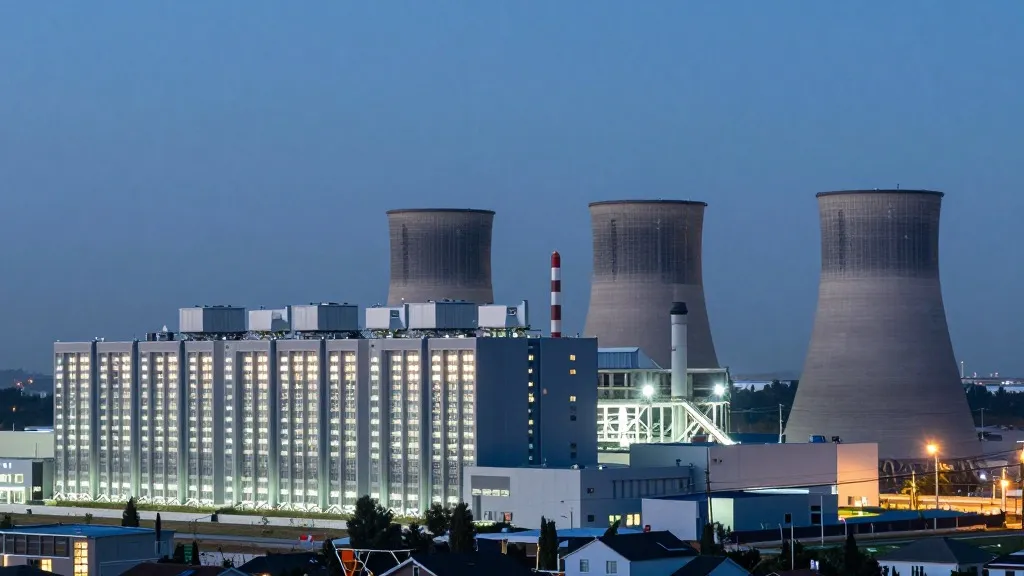
The Trump administration has introduced a new directive requiring artificial intelligence data centers to provide financial or energy dividends to the communities hosting them. In a recent post on Truth Social, President Donald Trump outlined a mandate designed to mitigate the rising electricity costs that have fueled local opposition to these massive facilities. The core requirement is that data center operators not only generate their own power but also return any excess energy to the local grid, effectively using these assets to stabilize or reduce utility bills for nearby residents.
This move addresses a growing friction point between the rapid expansion of AI infrastructure and the small towns bearing the burden of its resource consumption. Communities across the United States have increasingly protested the arrival of hyperscale data centers, citing specific grievances such as noise pollution, air quality degradation, water scarcity, and deforestation. By introducing a mechanism for data centers to pay back into the community, the administration aims to transform these facilities from sources of local resentment into partners in community economic stability. The strategy is intended to make the presence of these large-scale computing hubs more palatable to local stakeholders who have historically opposed their construction.
The policy builds upon previous executive orders that compelled these companies to become self-sufficient in power generation. Under the new framework, the excess electricity produced by these on-site generation systems would be directed toward local consumers. This approach is linked to a recently passed act that requires data centers to cover the costs of necessary grid upgrades, preventing those expenses from being passed on to local taxpayers. By ensuring that the infrastructure improvements are funded by the operators rather than the municipality, the administration seeks to create a more equitable financial relationship between the tech industry and local governments.
President Trump emphasized the economic incentive of this arrangement, noting that data centers which were once unpopular have become highly accepted when financial agreements are in place. He urged industry leaders to "MAKE DEALS, and get them built!!!" The administration’s primary motivation remains its desire to maintain a competitive edge in the global AI race, particularly against China. By smoothing over local political obstacles, the government hopes to accelerate the deployment of critical AI infrastructure without waiting for lengthy regulatory battles or community consent processes to conclude.
However, the practical implementation of this energy dividend raises questions regarding the timing and nature of the benefits. Critics note that while the financial aspect addresses a key pain point, other environmental impacts such as water usage and ecological damage remain unresolved. Furthermore, the type of power generation currently being installed by many data centers involves gas-powered generators, which can be noisy and inefficient. For residents living in close proximity, the immediate benefit of lower electricity bills may be offset by continued noise and air pollution, complicating the narrative of a clear community win.
The term "dividend" also introduces an interesting economic nuance, as corporations typically only pay such distributions when they are profitable. New data center builds often face significant initial capital expenditures, meaning they may not be in a position to generate substantial surplus value for a considerable period. Despite these complexities, the administration views this mandate as a necessary step to win back favor with local populations. The success of this initiative will depend on whether the financial and energy offsets are substantial enough to outweigh the ongoing operational impacts on the local environment and infrastructure.
As the AI sector continues to expand, this policy represents a shift toward a model where large-scale technology infrastructure must provide tangible local benefits. Whether this energy-sharing mandate is sufficient to turn opposition into support remains to be seen, but it signals a new era of negotiated coexistence between hyperscale computing and the communities that house them.
Source: Tom's Hardware